Understanding Wuyi rock oolong tea bulk export: A Bulk Buyer's Guide to Single-Origin Oolong
When tea importers, distributors, and wholesale buyers search for Wuyi rock oolong tea bulk export, they are looking for a reliable source of authentic Wuyi rock oolong tea in commercial quantities. This is not a consumer shopping query — it is a procurement search driven by buyers who need to verify origin, evaluate quality grades, understand pricing structures, and navigate export logistics before committing to a bulk purchase. This guide is written for that buyer: the professional tea importer who needs to assess whether NH Tea's Wuyi rock oolong program meets their commercial requirements.
What Makes Wuyi Rock Oolong Different from Other Oolong Teas
Rock oolong (yancha) is the collective name for oolong teas grown in the Wuyi Mountains of Fujian Province, China. The unique growing environment — rocky cliffs, mineral-rich soil, and misty microclimate — imparts what tea professionals call rock rhyme (yan yun), a distinctive mineral character that cannot be replicated in other regions. This geographic specificity is why origin verification matters so much to bulk buyers.
Within the Wuyi rock oolong category, Da Hong Pao is the most internationally recognized varietal. NH Tea's Da Hong Pao is characterized by the following production specifications:
- Origin: Wuyi Mountains, Fujian Province
- Oxidation: 70% — a deep oxidation level that creates the roasted, full-bodied profile rock oolong is known for
- Roasting: 8+ hours of traditional wood-fire roasting — this is the critical step that develops the complex mineral and honey notes
- Aging: minimum 3 years — Da Hong Pao at NH Tea is aged in the climate-controlled warehouse, allowing the roasted character to mellow and the mineral complexity to develop
- Aromatic profile: honey and orchid aromatics in each steep, with layered mineral notes
For comparison, NH Tea's other oolong products represent different regional styles: Tie Guan Yin from Anxi (50% oxidation, hand-rolled tight balls, 3-4 roasting rounds), Ali Shan from Taiwan (30% oxidation, light roast, 1,400m elevation), and a herbal-oolong blend with osmanthus. Each serves a different buyer segment and price point.
How to Evaluate Rock Oolong Quality Grades for Bulk Purchase
Rock oolong is not a commodity — quality varies significantly by leaf grade, garden source, harvest season, and aging duration. Bulk buyers who treat all rock oolong as equivalent will end up with inconsistent product. Here is a practical grading framework based on the production specifications NH Tea works with:
| Quality Factor | Premium Grade Indicators | Standard Grade Indicators | Why It Matters for Bulk Buyers |
|---|---|---|---|
| Leaf Grade | Hand-picked from heritage bushes, whole leaf | Machine-harvested, broken leaf acceptable | Determines cup clarity, steep count, and retail price point |
| Roast Profile | 8+ hours wood-fire, multi-round | Shorter roast, gas or electric heat | Affects flavor depth, aroma complexity, and shelf stability |
| Aging Duration | 3+ years in climate-controlled warehouse | No aging, shipped fresh from production | Aged rock oolong commands premium pricing; fresh production suits volume buyers |
| Origin Documentation | Named garden, harvest batch, QR traceability | Regional origin only, no batch tracking | Named-garden lots support premium retail claims; regional lots suit blending |
| Lab Testing | Every lot tested to GB 2763 and EU MRL | Periodic or no testing | Per-lot testing is essential for regulated market import |
Buyers should request the specification sheet and lab report for each lot they are evaluating. NH Tea provides these as standard documentation for every shipment.
The Wuyi Rock Oolong Supply Chain: From Garden to Export
Understanding the supply chain helps bulk buyers assess supply reliability and identify potential bottlenecks. NH Tea's rock oolong supply chain works as follows:
- Contracted gardens in Wuyishan — NH Tea works with 120 hectares of contracted gardens across four origins, including Wuyishan for rock oolong. Contracted gardens mean the company has a direct relationship with the grower, not a spot-market purchase.
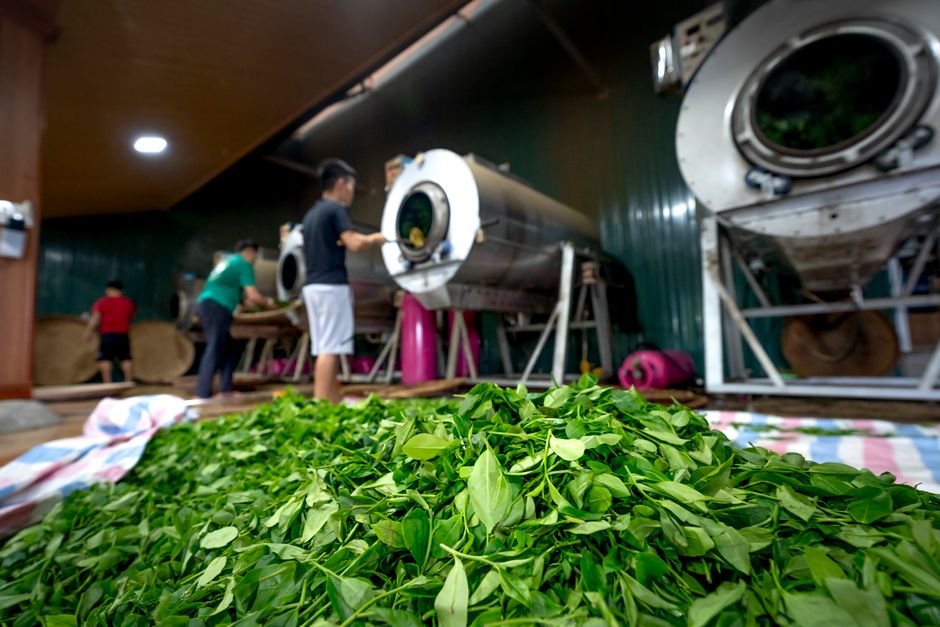
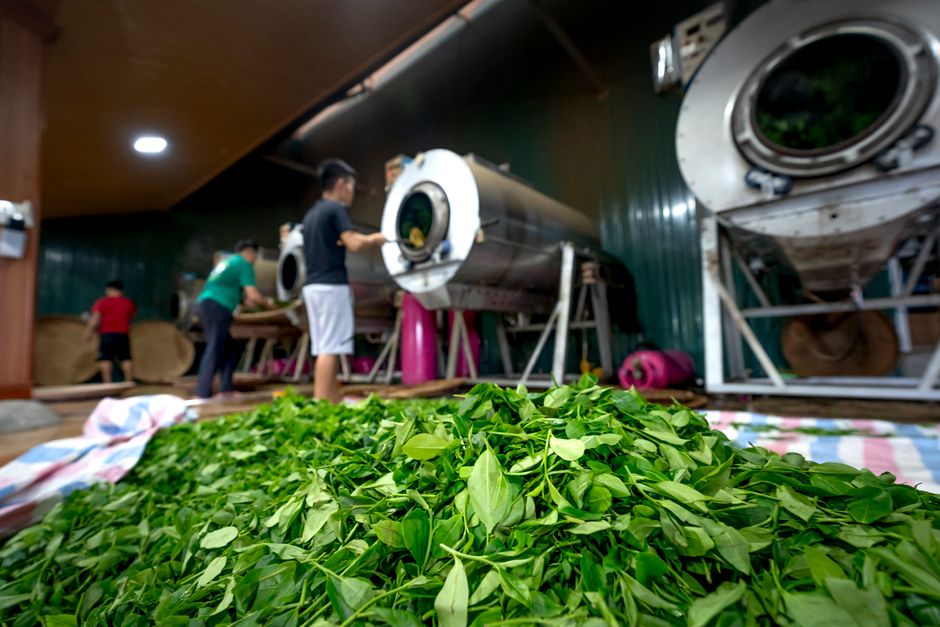
- Harvest and initial processing — leaves are harvested and undergo withering, oxidation, and initial roasting at or near the garden. The 70% oxidation and 8+ hour wood-fire roasting specification is established at this stage.
- Aging in climate-controlled warehouse — Da Hong Pao is aged minimum 3 years in NH Tea's climate-controlled aging warehouse. This is a critical differentiator — many suppliers ship fresh production without aging, which results in a harsher, less complex cup. The aging warehouse also ensures year-round supply consistency, as buyers are not limited to purchasing immediately after harvest.
- In-house lab testing — every lot is tested for pesticide residue to China GB 2763 and EU MRL limits before any shipment. This testing happens at NH Tea's own facility, not a third-party lab, which means results are available quickly and can be included with shipment documentation.
- Packing and export preparation — finished tea is inspected, sealed, and packed for export. Packing lists, organic transaction certificates, and lab reports are prepared for the buyer's import clearance.
- Shipping — from single-carton trial orders to container programs, NH Tea ships to buyers in over 35 countries. Shipping terms and documentation are arranged based on the buyer's destination and import requirements.
Pricing Factors and Cost Structure for Bulk Rock Oolong
Bulk tea pricing is not a single number — it is a function of leaf grade, aging duration, certification level, order volume, and packaging format. While specific pricing requires a quotation based on the buyer's requirements, understanding the cost drivers helps buyers make informed decisions:
- Leaf grade — hand-picked heritage bush leaf commands a premium over machine-harvested leaf. Buyers targeting premium retail should specify hand-picked; buyers using rock oolong as a blending component may find standard grade more cost-effective.
- Aging duration — 3-year aged Da Hong Pao is more expensive than fresh production due to warehouse storage costs and inventory carry. However, aged stock delivers a more complex, smoother cup that supports premium retail positioning.
- Certification overhead — organic certification (China Organic, EU Organic, USDA Organic) adds cost to the raw material. Buyers who do not need organic certification can source conventionally grown rock oolong at a lower price point, though NH Tea's organic-certified lots provide stronger market access.
- Order volume — larger orders benefit from production efficiencies. Container programs with scheduled production runs typically achieve better per-kilogram pricing than single-carton trial orders.
- Packaging format — bulk loose-leaf in foil bags is the most cost-effective format. Individual sachets, pressed cakes, and custom gift packaging add cost but may be necessary depending on the buyer's distribution channel.
Buyers should request a detailed quotation that breaks down cost by line item, including raw material, packaging, certification documentation, and shipping, to enable accurate comparison across suppliers.
Quality Control and Food Safety: What NH Tea Does at Every Lot
For bulk importers, food safety documentation is not a marketing feature — it is a regulatory requirement. A shipment that fails pesticide residue testing at the destination port can be seized, destroyed, or returned, costing the buyer significant money and time. NH Tea's QC system is designed to prevent this scenario:
- In-house pesticide residue lab — NH Tea tests every lot to China GB 2763 and EU MRL limits before shipment. EU MRL limits are among the strictest in the world; testing to this standard provides a high confidence level for import into any market.
- QR code batch traceability — every lot is traceable to a named garden and harvest batch. If a question arises about a specific shipment, the batch number links directly to the source garden and production records.
- Organic certification chain — NH Tea holds ISO 22000:2018, HACCP, China Organic, EU Organic, and USDA Organic certifications, plus an SC food production license. Organic transaction certificates are provided per lot, creating a documentation chain from garden to buyer.
- Lab reports on request — buyers receive lab reports with each shipment showing specific pesticide residue test results. This documentation supports import clearance and retailer compliance requirements.
Importers should still consider sending the first shipment from a new supplier to an independent lab in the destination market as a baseline verification. This is standard practice in professional tea procurement.
Comparing NH Tea's Rock Oolong to Other Sourcing Options
Bulk buyers evaluating NH Tea against other Wuyi rock oolong suppliers should consider several dimensions beyond price. The following decision checklist helps structure the comparison:
| Evaluation Dimension | Key Questions to Ask Any Supplier | NH Tea's Position |
|---|---|---|
| Garden Relationship | Do you contract gardens or buy from the spot market? | 120 hectares of contracted gardens across four origins |
| Processing Facility | Is processing in-house or outsourced? | Own 8,000 m² facility, approximately 600 tons annual capacity |
| Aging Capability | Do you have climate-controlled aging storage? | Yes — for rock oolong and Pu-erh, ensuring year-round supply |
| Lab Testing | Do you test every lot? To what standard? | Every lot, in-house, to GB 2763 and EU MRL limits |
| Certifications | Which organic and food safety certifications do you hold? | ISO 22000:2018, HACCP, China/EU/USDA Organic, SC license |
| Export Experience | How many countries do you export to? | Over 35 countries since 2008 |
| Traceability | Can you trace each lot to a named garden? | Yes — QR code to named garden and harvest batch |
This checklist is not specific to NH Tea — it is a framework any bulk buyer should apply when comparing suppliers. The answers determine supply reliability, quality consistency, and regulatory compliance risk.
Export Documentation and Logistics for Bulk Rock Oolong Shipments
For buyers new to importing Chinese tea, the documentation and logistics process can be complex. NH Tea provides the following documentation with each shipment:
- Commercial invoice and packing list — standard export documentation required for customs clearance.
- Organic transaction certificates — lot-specific certificates confirming the tea meets organic standards. Required for organic-labeled products entering the EU, US, and other regulated markets.
- Pesticide residue lab reports — test results showing compliance with China GB 2763 and EU MRL limits. These reports support import clearance and may be requested by the destination country's food safety authority.
- Phytosanitary certificate — issued by China's customs authority, confirming the tea meets the destination country's plant health requirements.
- Certificate of origin — confirms the tea was produced in China. May be required for preferential tariff treatment under free trade agreements.
Shipping options range from single-carton courier shipments for trial orders to full container load (FCL) sea freight for container programs. NH Tea works with buyers to arrange shipping terms that match their logistics capabilities and destination port requirements.
Managing Supply Continuity for Long-Term Rock Oolong Programs
Bulk buyers establishing a long-term rock oolong supply program need to think beyond a single purchase. Supply continuity — the ability to reorder the same product with consistent quality months or years later — is a critical success factor. NH Tea's infrastructure supports supply continuity in several ways:
- Climate-controlled aging warehouse — rock oolong is aged minimum 3 years before release. The aging warehouse holds inventory from multiple harvest years, meaning buyers are not limited to purchasing immediately after the spring or autumn harvest. This smooths seasonal supply gaps.
- Contracted garden relationships — with 120 hectares of contracted gardens, NH Tea has a predictable raw material supply. Contracted gardens mean the company commits to purchasing from specific growers, which in turn means those growers maintain the tea varietals and quality standards NH Tea requires.
- Locked specification system — once a buyer approves a sample, the specification (origin, oxidation, roast, leaf grade, aging) is documented and referenced for every production run. This ensures reorder consistency.
- Production capacity — the 8,000 m² facility processes approximately 600 tons of finished tea annually, providing capacity for both single-buyer programs and multiple concurrent customer programs.
- 600 tons annual capacity — this scale means NH Tea can handle both specialized small-lot orders and high-volume container programs without compromising production scheduling.
Buyers planning a multi-year supply agreement should discuss production scheduling, inventory holding, and reorder lead times with NH Tea to ensure the program meets their commercial timeline.
Seasonal Considerations for Rock Oolong Procurement
Rock oolong, like all agricultural products, has seasonal cycles that affect availability, pricing, and cup characteristics. Bulk buyers who understand these cycles can time their purchases strategically:
- Spring harvest (April-May) — the primary harvest for Wuyi rock oolong. Spring flush leaves generally have higher amino acid content, producing a sweeter, more aromatic cup. Spring harvest is typically the most sought-after by premium buyers.
- Autumn harvest (September-October) — autumn harvest rock oolong tends to have a more robust, roasted character with less floral sweetness. Some buyers prefer autumn harvest for blending or for markets that favor a stronger roast profile.
- Aging cycle — because NH Tea ages Da Hong Pao minimum 3 years, buyers are purchasing tea that was harvested 3+ years ago. This means the current offering reflects the production quality of a specific past harvest, not the current season. The aging warehouse holds inventory from multiple harvest years, providing options.
- Order timing — buyers who want a specific harvest year or season should communicate this requirement early, as aged inventory from a specific year is finite. Container program buyers can schedule annual production runs aligned with the harvest and aging cycle.
Shipping and Lead Time Planning for Bulk Orders
Lead time is a critical planning factor for bulk tea importers. A realistic lead time includes production scheduling, QC testing, documentation preparation, and shipping transit. While actual lead times vary by order complexity and shipping method, buyers should plan for the following components:
- Production scheduling — if the ordered product is in stock (aged inventory), production time is primarily packing and QC. If fresh production is needed, the timeline extends through harvest, processing, and aging.
- Lab testing — in-house testing to GB 2763 and EU MRL limits is conducted before shipment. Results are typically available quickly since testing is done on-site.
- Documentation preparation — organic transaction certificates, lab reports, phytosanitary certificates, and packing lists need to be prepared. Build 1-2 weeks for documentation.
- Shipping transit — sea freight from China to EU or North American ports typically takes 3-6 weeks depending on destination. Air freight is faster but significantly more expensive and usually reserved for urgent trial orders.
- Customs clearance — destination port customs clearance can take 3-7 days depending on the country and completeness of documentation.
Buyers should communicate their target delivery date to NH Tea early in the process so the full timeline can be planned backward from that date.
Frequently Asked Questions About Wuyi rock oolong tea bulk export
What is the difference between Da Hong Pao and other Wuyi rock oolong varietals?
Da Hong Pao is the most internationally recognized Wuyi rock oolong varietal, known for its roasted character and mineral complexity. Other Wuyi varietals (such as Rou Gui, Shui Jin Gui, and Tie Luo Han) have different flavor profiles but share the same rocky growing environment. NH Tea's current product line focuses on Da Hong Pao as its primary rock oolong offering, aged minimum 3 years with 70% oxidation and 8+ hours wood-fire roasting.
How does the 3-year aging process affect the tea?
Aging rock oolong in a climate-controlled warehouse allows the roasted character to mellow and the mineral complexity to develop. Freshly roasted rock oolong can taste harsh or overly smoky; after 3+ years of aging, the roast integrates with the leaf, producing a smoother, more layered cup. Aged rock oolong also has better shelf stability than fresh production.
Can I request a specific harvest year for my bulk order?
Because NH Tea ages Da Hong Pao minimum 3 years, the current inventory includes tea from multiple past harvest years. Buyers who want a specific harvest year should communicate this requirement when placing their order. Availability depends on remaining inventory from that year's production.
What pesticide residue testing is performed on each lot?
Every lot is tested in NH Tea's in-house lab to China GB 2763 and EU MRL limits before any shipment. EU MRL limits are among the strictest globally. Lab reports showing specific test results are provided with each shipment and can be submitted to destination market authorities if required.
How is the tea packaged for bulk export?
Bulk loose-leaf rock oolong is typically packed in foil bags within export cartons. Buyers can specify carton size and packing configuration based on their logistics requirements. For buyers needing retail-ready packaging, NH Tea also supports sachet, pressed cake, and custom gift tin formats.
What is the shelf life of aged Da Hong Pao?
Aged rock oolong, when stored properly in sealed foil packaging away from light, heat, and moisture, has a shelf life of 24-36 months or longer. Unlike green tea, which loses freshness quickly, rock oolong's roasted and aged character makes it more shelf-stable. Properly stored aged rock oolong can improve with additional time.
Does NH Tea provide samples before bulk order?
Yes. NH Tea provides samples with corresponding lab reports for buyer evaluation. Sample quantities are sufficient for cup evaluation and comparison. Buyers should request samples of the specific grade and specification they are considering for bulk purchase.
What shipping terms does NH Tea offer for bulk orders?
NH Tea supports shipping from single-carton courier shipments to full container load sea freight. Shipping terms (FOB, CIF, DDP, etc.) can be discussed based on the buyer's logistics capabilities and destination port. NH Tea has experience shipping to over 35 countries across the EU, North America, Southeast Asia, the Middle East, and Australia.
Can NH Tea supply rock oolong in container-load quantities?
Yes. NH Tea's facility processes approximately 600 tons of finished tea annually, and the climate-controlled aging warehouse holds inventory from multiple harvest years. Container programs with scheduled production runs are available for buyers with ongoing high-volume requirements. Contact NH Tea to discuss your specific volume needs.
What documentation is included with a bulk rock oolong shipment?
Each shipment includes a commercial invoice, packing list, organic transaction certificates (for organic-certified lots), pesticide residue lab reports (tested to GB 2763 and EU MRL limits), phytosanitary certificate, and certificate of origin. Additional documentation can be provided on request based on the destination market's requirements.
Planning Your Bulk Rock Oolong Purchase: A Step-by-Step Checklist
To help bulk buyers structure their procurement process, here is a practical step-by-step checklist:
- Define your requirements — product sub-category (Da Hong Pao or other varietal), leaf grade, aging preference, organic or conventional, packaging format, and estimated annual volume.
- Request samples and specifications — contact NH Tea with your requirements and request samples with lab reports. Evaluate cup profile, leaf appearance, and aroma.
- Verify certifications — confirm which certifications (ISO 22000:2018, HACCP, EU Organic, USDA Organic) are relevant to your destination market and retail channel.
- Request a detailed quotation — ask for a line-item breakdown including raw material, packaging, certification documentation, and estimated shipping cost.
- Place a trial order — start with a single-carton trial to validate the full supply chain including packaging, shipping, import clearance, and product quality on arrival.
- Lock the specification — once the trial order meets your requirements, document the agreed specification as the reference standard for future orders.
- Plan your container program — for ongoing supply, discuss production scheduling, inventory holding, and reorder lead times with NH Tea to establish a reliable supply cadence.
Use the inquiry form on this page to request samples, specifications, and lab reports. Include your target product grade, estimated volume, destination market, and packaging preference so NH Tea can prepare the most relevant materials for your evaluation.